A panoptic view of leather. Learn the types of Leather.
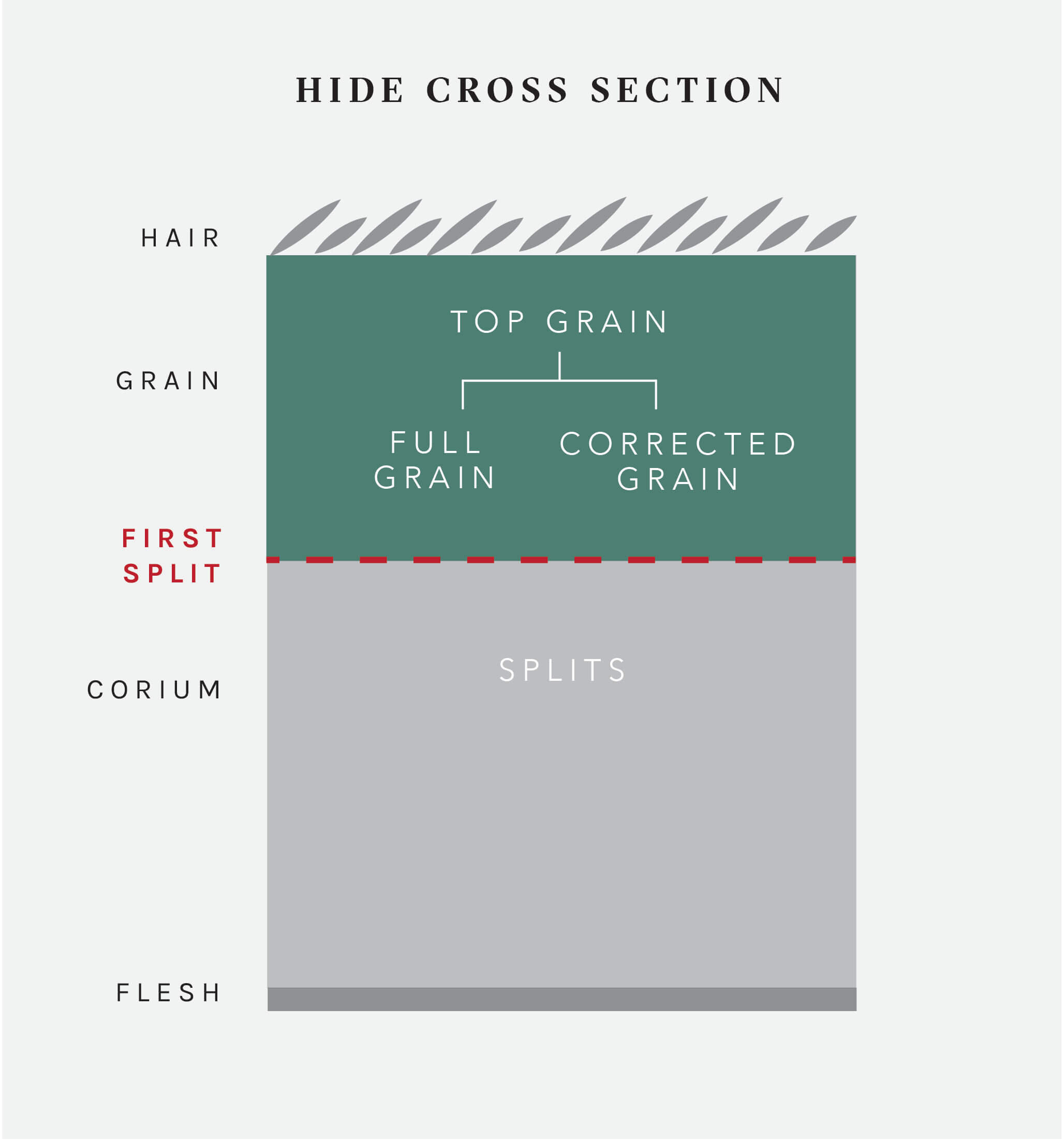
Credit: The Tannery Row
https://www.thetanneryrow.com/leather101

A panoptic view of leather. Learn the types of Leather.
Credit: The Tannery Row
https://www.thetanneryrow.com/leather101

Exotic leather comes from unique animal hides like crocodile, ostrich, or python, featuring distinctive textures and patterns. These rare leathers are highly prized for luxury goods and statement pieces. Each hide is unique, making exotic leather items truly one-of-a-kind.
These leathers are often regulated under international trade agreements and are commonly used in luxury goods, footwear, belts, wallets, and small leather accessories. Each exotic leather behaves differently depending on its structure and tanning method.

Vegetable-tanned leather is made using natural tannins from tree bark, leaves, and plants. This process preserves the leather’s collagen fibers in a way that makes it highly absorbent, firm, and capable of developing a natural patina over time. Because it absorbs oils and moisture easily, it darkens with use and handling. Vegetable-tanned leather is commonly used for belts, saddles, wallets, and structured bags. Care should be gentle, using minimal water and light conditioning when needed.
While all vegetable-tanned leathers rely on botanical tannins, there are multiple vegetable-tanning methods and formulations, each resulting in distinct characteristics in firmness, color, absorption, and aging behavior.

Full-grain leather is the top layer of the hide and has not been sanded or corrected. It retains natural markings and has the strongest fiber structure. Full-grain leather is durable, breathable, and ages well when properly cared for.
Be careful about labeling "Full-Grain" can be misleading. And often used for marketing purposes.

Top-grain leather comes from the upper layer of the hide but has been lightly sanded or corrected to remove surface imperfections. This creates a smoother, more uniform appearance while still maintaining good strength and flexibility.
Top Grain Leather is considered 2nd class below Full Grain Leather.

Nubuck is similar to suede but made from the outer layer of the hide, making it more durable. It has a soft, velvety finish with a refined appearance. Nubuck offers a premium look with better durability than suede, ideal for high-end leather goods.
Nubuck is close to Top Grain Leather. But technically 2nd class leather because it outlasts suede making it tough, durable and great for boots.

Split leather is made from the lower layers of the hide after the top grain has been removed. It is less durable and often finished or coated to improve appearance. Its lifespan and care depend on the surface treatment applied.
Due to its lack of a finished, smooth surface, it is best utilized for structure, internal linings, padding, and small rugged goods. A perfect apron for the blacksmith or chef.

Crafted from the hide's underside, suede is prized for its signature soft, napped finish. Due to its absorbent nature, it requires protection from moisture. This versatile material is a popular choice for fashion—such as jackets and skirts—and luxury upholstery in automotive and residential interiors. Its velvety nap provides a beautiful contrast when paired with traditional smooth leather.
Suede can be Chrome Tanned or Vegetable Tanned. suede is often referred to as having a"nap"

“Genuine leather” indicates that a product contains real leather, but it is not a mark of high quality. Because this material is often heavily processed, its durability varies widely. While it is technically real leather, it is generally considered 'third-class' and is inferior to higher grades. In leatherworking, more structured fibers and a tighter grain typically signify better quality.
There is nothing wrong with 'genuine leather'; it is simply a matter of preference. Everyone has different tastes when it comes to leather, and many high-quality products are made from this grade. A significant portion of the world's shoe production uses genuine leather, and you have likely owned at least one pair in your lifetime.

Chrome-tanned leather is processed using chromium salts, resulting in a soft, flexible leather that resists water and holds color well. It is commonly used for jackets, shoes, and handbags. It does not absorb oils as readily as vegetable-tanned leather.
One simple way to identify chrome-tanned leather is by looking at the center (edge) of the leather.If you notice a faint blue or grayish-blue color inside the leather, this is a common sign of chrome tanning. It also means the leather is not fully dyed all the way through, which is typical for many chrome-tanned leathers.

Polyurethane (PU) leather is a synthetic material engineered to mimic genuine leather while offering enhanced durability and water resistance. It's an excellent choice for those seeking a vegan alternative without compromising on quality or aesthetics. Vegan and PU are both synthetic leathers.
PU leather is remarkably easy to maintain—simply wipe it with a soft, damp cloth to remove dust and dirt. Naturally resistant to water and stains, it is ideal for everyday use. This material is commonly found in office chairs, restaurant seating, commercial airline interiors, footwear, and a wide variety of other consumer products. It is often preferred in commercial settings(like hospitals or restaurants) because it can be sanitized with harsher cleaners that would ruin genuine or top-grain hides.

Bonded leather is a blend of leather scraps and polyurethane, offering an affordable alternative to full-grain leather. While it provides a leather-like appearance, it requires specific care to maintain its quality and longevity.
Keep bonded leather away from excessive moisture and direct sunlight, as these can cause the material to crack or peel. Its appearance can resemble leather look. Easy to scratch. material can be mistaken for genuine leather.

Pigmented leather has a protective color coating on the surface. This makes it more stain-resistant but less absorbent and unable to be dyed. The standout feature of this material is its excellent scratch resistance. It is the perfect choice for high-traffic items that require the structural integrity of leather but need a heavy-duty, protective finish to withstand daily wear and tear.
Because the natural hide is hidden beneath these protective layers, its quality is often a matter of judgment. It isn’t strictly 'top-tier' or 'low-grade'; instead, its value depends entirely on the tannery and the origin of the hide.

Embossed leather is leather that has been corrected and stamped with a patterned die. This process can replicate almost any animal hide, including exotics like crocodile, ostrich, elephant, hippo, and snake. Beyond animal textures, embossed leather can also feature geometric patterns—essentially anything that can be etched onto a roller and pressed into the hide. Embossed Leathers can be Vegetable Tanned or Chrome Tanned.